A Time Between Worlds¹
“During times between worlds there emerge ideas and thinkers that are, properly speaking, without a world. Their work is liminal — not within the old world or the world to come, but serving as the bridge between them. The focus of work in the liminal is on foundations: metaphysics, religion, and the deeper codes of culture — education in its broadest sense.”— Zak Stein
We are living through such a threshold.
And the urgency of this work emerges from the ever greater magnitude of ecological collapse, social fragmentation, institutional breakdown, technological destabilization, and widespread crises of meaning and belonging.
These crises are not separate. They are symptoms of a deeper civilizational disease, what some have called the meta-crisis: a crisis of perception, values, and separation from the web of life.² A fundamental breakdown in how we intimately relate with all life—to ourselves, to each other, to the world, and to what is sacred.
This crisis we are facing did not happen overnight. It is the culmination of centuries shaped by worldviews that desacralized life, separated human beings from the web of existence, and reduced reality into something to dominate, extract from, and control. It destroyed our sense of meaning, other living beings and our capacity to respond to complexity. The result is a civilization generating problems that exceed the wisdom, maturity, and capacities available to respond to them.
For the first time in recorded history, we are facing risks not only to the existence of humanity, but of the whole biosphere.³
And this scenario not only holds escalating challenges such as ecological points of no return, AI-accelerated catastrophic risks and more, but it also continues to perpetuate the consequences of systemic collapse - often upon those who are already suffering the most from the extractive dynamics of our dominant systems.⁴
Increasingly, it has become clear that the very structures that produced this crisis cannot guide us beyond it. We are living through a time between worlds. The old stories are breaking apart, yet the new ones have not fully arrived. There is no clear map for how to move through this threshold.⁵ We are being invited to actively participate in the creation of what comes next.
We recognize this moment as a possible civilizational rite of passage: a collective initiation requiring humanity to shed old ways of seeing, being, and relating in order to grow into more mature, wise, and life-enhancing human beings. But rites of passage require guidance, community, practice, and structures capable of holding such profound transformation.
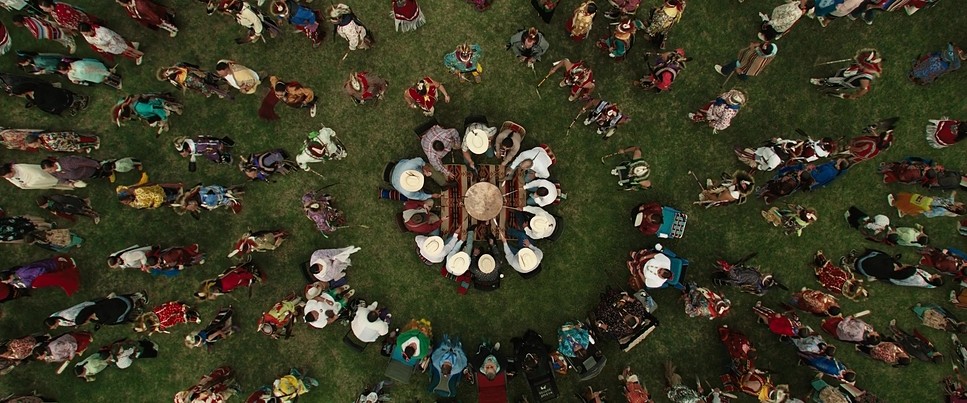
A Generation Between Worlds
Many young people today are coming of age with the strange experience of living without a world they can fully belong to.
The inherited promises of modern life — success, stability, endless progress, upward mobility — are losing their credibility at the same time that the worlds capable of replacing them have not yet fully taken form. The youth is being asked to individuate within a culture whose foundations they increasingly question, while somehow having to imagine and create forms of life they have never been shown how to inhabit.
To come of age during a civilizational threshold can be profoundly meaningful. It is to live close to enormous possibilities, creativity, and transformation, but it can also be deeply disorienting.
What happens when you can clearly sense that the world you inherited is failing, yet cannot see a viable path toward the one you long to live in? When conventional definitions of success no longer feel meaningful, but no legitimate alternatives have been built? When your grief, imagination, and desire to contribute are real, but there are few spaces capable of recognizing them or helping them mature into a life of responsibility and service?
The task, then, is not simply to celebrate young people or offer them hope. It is to build credible pathways through which their deepest longings can meaningfully find a place to take root and be nourished to fully come to life.
Pathways that allow them to develop the spiritual depth, relational maturity, systemic understanding, practical capacities, and communities of belonging required to participate fully in what comes next. Pathways where their soul, intelligence and ambition do not have to be absorbed entirely into systems organized around accumulation, status, and extraction, but can be directed toward societal healing, systemic work, community-building, and artistic forms of expression serving cultural renewal and the flourishing of all life.
If we fail to create such pathways, we risk losing another generation to our modern dominant paradigm, because the pathways and structure available to them will continually pull most of them back toward the logic of the world they are trying to outgrow.
This is why the work feels urgent!
And it cannot be carried by the young alone.
Times between worlds require generations and species to find one another. Older generations carry hard-won experience, resources, institutional knowledge, and lessons from lives already lived within the systems now revealing their limits. Younger generations carry a sensitivity to what no longer works, a refusal of inherited assumptions, and an imagination increasingly shaped by the futures they know they will have to inhabit. And the more-than-human world carries forms of intelligence and ecological memory that human civilization has too often forgotten how to listen to.
Our task, then, is both intergenerational and interspecies: to restore forms of responsibility that extend beyond our own lifetimes and beyond the human. To steward this passage wisely means learning to act in relationship with those who came before us, those who will come after us, and the living world whose flourishing is inseparable from our own.
The young should not have to inherit this moment alone. And the future should not be shaped by any one generation or species alone.
What This Moment Requires
“The civilization in breakdown is a civilization whose affordances are failing — whose old possibilities for being human are becoming unavailable faster than new ones are being unfolded.”— Steve March
During moments of collapse, despair, grief, and disorientation can become conditions for profound transformation, but only when held within structures strong enough to support the metamorphosis required of us. Without such containers, crisis often leads not toward maturation, but toward deeper fragmentation, numbness, polarization, and retreat into what is already dying.
Our wisdom-centered educational architecture is trying to offer another possibility.
A structure where people can move through this civilizational rite of passage with greater support, guidance, practice, and community. Spaces where individuals can grieve, question, heal, remember their belonging within the web of life, and gradually embody more mature and life-affirming ways of being human together.
At its heart, this work is about cultivating the conditions for the long arc of transformation required for wiser humans, communities and cultures to emerge.
The time between worlds asks for those who are committed to building a new cultural paradigm.
There is a path, but it's not a given at all that we will take it. We are the ones who will have to figure out the appropriate responses for our time.